OpenZhenZhen AI 提示词画廊 · gpt-image-2.5 · image
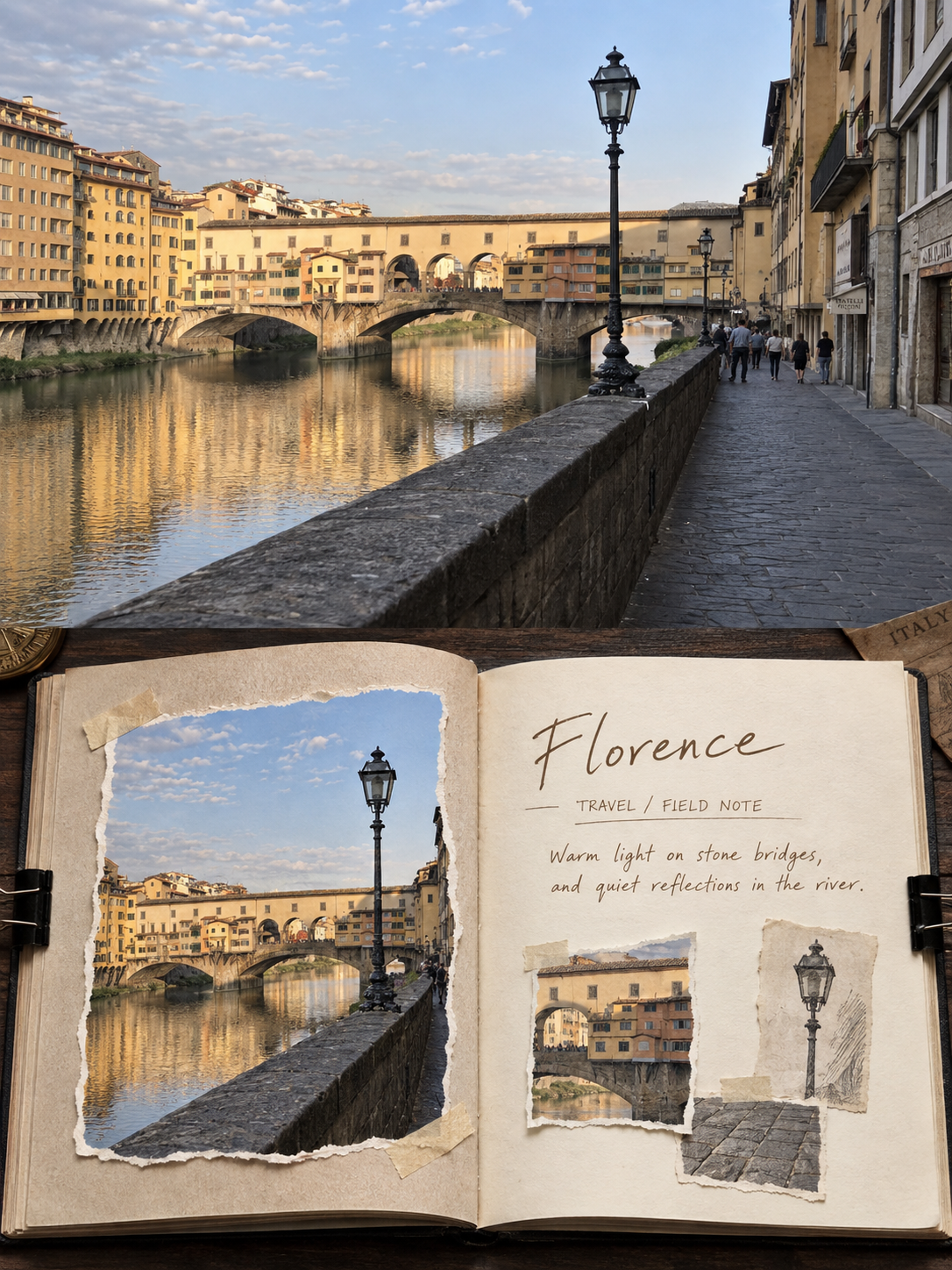
高级胶片质感旅行手账
Premium Film-Texture Travel Journal
来自 OpenNana 的图像提示词,已按本地图像分类和站点 gpt-image-2.5 归类整理。
提示词 / Prompt
中文提示词
请将上传的每一张旅行照片分别制作成一张独立的高级 3:4 竖版旅行手账作品,不要把多张照片拼在同一张图中。 画面采用清晰的上下结构: 上半部分约占画面 50%,完整保留输入的真实照片。保持主体身份、人物数量与姿态、建筑结构、道路方向、空间关系、真实材质、自然光影和原有色彩,不得更换地点、增删人物、重塑建筑、改变透视或把照片画成插画。只允许进行轻微的旅行杂志级调色与克制的胶片质感。 下半部分约占画面 50%,呈现一本真实摊开的旅行手账。手账放在低饱和深色桌面上,清楚表现左右页面、中央书脊、纸页厚度、轻微翻页弧度、自然投影和细腻纸张纹理。书本两侧可以使用黑色长尾夹固定。 左页使用一块从照片色彩中提取的低饱和纸张作为底页,在上面粘贴一张同一旅行照片的撕边印刷照片。照片必须保持原场景可辨认,但可以重新裁切以突出最重要的主体。撕边应具有真实纸纤维、轻微翘边和自然厚度,并使用两到三小段半叠层米色胶带固定。 右页保留大面积连续的暖白色纸张,不要塞满内容。根据输入照片中真实可见或能够可靠确认的信息,选择二到四件值得纪念的小元素,例如: - 建筑局部、窗户、拱门、屋顶、路灯或瓷砖纹样; - 车辆号码牌、街道路牌、车票或交通线路片段; - 水面、植物、船只、桥梁、雕塑或当地材料纹理; - 一张很小的撕边照片、一块方格纸或一段简短铅笔速写。 纪念元素必须来自输入照片或已确认的地点信息,不得加入其他城市的地标、通用旅游贴纸或虚构纪念品。所有小元素都必须明显小于左页主照片,并围绕文字松散分布,保持右页安静、克制和有呼吸感。 右页只加入以下三层英文文字: 1. 一个根据照片主体或地点提炼的 1–3 个英文单词标题; 2. 一个简短字段,格式为“PLACE / FIELD NOTE”;如果无法可靠确定地点,使用“TRAVEL / FIELD NOTE”; 3. 一句 5–12 个英文单词的观察句,只描述照片中真实可见的颜色、光线、建筑、道路、自然景物或空间感受。 文字必须简短、准确、清楚可读,使用深棕色铅笔、钢笔或自然手写质感。不要生成长段落,不要添加作者名、日期、坐标、品牌、网址、二维码、Logo、乱码、假中文或其他文字。 整体风格像一本真实旅行结束后整理出来的私人纪念手账:安静、温暖、克制、具有真实纸张、胶带、撕边照片和收藏物的触感。上方是真实世界,下方是从同一地点留下来的纸面记忆。 必须保持: - 一张输入照片对应一张独立成品; - 3:4 竖版; - 上下区域接近 1:1; - 上方照片清楚、完整且高度保真; - 下方必须是真实摊开的手账,不是平面双栏海报; - 左页承担主要照片; - 右页保留大面积留白; - 纪念元素必须来自同一地点; - 所有图片内容都能追溯到输入照片。 避免:multiple-photo collage, grid layout, altered architecture, invented landmark, replaced subject, distorted perspective, mirrored extension, blurred-photo background, dense scrapbook, excessive stickers, generic travel icons, unrelated souvenirs, full-page decoration, glossy digital template, flat vector layout, plastic 3D, illegible text, excessive typography, fake logo, watermark, signature.
English prompt
Please turn each uploaded travel photo into an independent high-end 3:4 vertical travel scrapbook work; do not combine multiple photos into one image. The screen adopts a clear top-bottom structure: The upper part occupies about 50% of the screen, completely retaining the input real photo. Maintain the identity of the subject, the number and posture of people, architectural structure, road direction, spatial relationship, real materials, natural light and shadow, and original colors. Do not change locations, add or delete people, reshape buildings, change perspective, or turn photos into illustrations. Only slight travel magazine-level color grading and restrained film texture are allowed. The lower part occupies about 50% of the screen, showing a real open travel scrapbook. The scrapbook is placed on a low-saturation dark desktop, clearly showing the left and right pages, the central spine, the thickness of the paper pages, the slight curling arc of the pages, natural shadows, and fine paper texture. Black binder clips can be used on both sides of the book to fix it. The left page uses a low-saturation paper extracted from the colors of the photo as the base page, and a torn-edge printed photo of the same travel photo is pasted on it. The photo must remain recognizable as the original scene but can be re-cropped to highlight the most important subject. The torn edges should have real paper fibers, slight warping, and natural thickness, and be fixed with two or three small pieces of layered beige tape. The right page maintains a large area of continuous warm white paper; do not fill it with content. Based on information actually visible or reliably confirmed in the input photo, select two to four small commemorative elements, such as: - Architectural details, windows, arches, roofs, street lamps, or tile patterns; - Vehicle license plates, street signs, tickets, or transportation route segments; - Water surfaces, plants, boats, bridges, sculptures, or local material textures; - A very small torn-edge photo, a piece of graph paper, or a short pencil sketch. Commemorative elements must come from the input photo or confirmed location information; do not add landmarks of other cities, generic travel stickers, or fictional souvenirs. All small elements must be significantly smaller than the main photo on the left page and distributed loosely around the text, keeping the right page quiet, restrained, and breathable. The right page only includes the following three layers of English text: 1. A title of 1–3 English words extracted based on the photo subject or location; 2. A short field in the format "PLACE / FIELD NOTE"; if the location cannot be reliably determined, use "TRAVEL / FIELD NOTE"; 3. An observation sentence of 5–12 English words, only describing the colors, light, architecture, roads, natural scenery, or spatial feelings actually visible in the photo. The text must be short, accurate, and clearly readable, using dark brown pencil, pen, or natural handwritten texture. Do not generate long paragraphs, and do not add author names, dates, coordinates, brands, websites, QR codes, logos, garbled characters, fake Chinese, or other text. The overall style is like a private commemorative scrapbook organized after a real trip: quiet, warm, restrained, with the tactile feel of real paper, tape, torn-edge photos, and collectibles. The top is the real world, and the bottom is the paper memory left from the same place. Must maintain: - One input photo corresponds to one independent finished product; - 3:4 vertical format; - Top and bottom areas are close to 1:1; - The top photo is clear, complete, and highly faithful; - The bottom must be a real open scrapbook, not a flat double-column poster; - The left page carries the main photo; - The right page maintains a large area of white space; - Commemorative elements must come from the same place; - All image content can be traced back to the input photo. Avoid: multiple-photo collage, grid layout, altered architecture, invented landmark, replaced subject, distorted perspective, mirrored extension, blurred-photo background, dense scrapbook, excessive stickers, generic travel icons, unrelated souvenirs, full-page decoration, glossy digital template, flat vector layout, plastic 3D, illegible text, excessive typography, fake logo, watermark, signature.
探索更多图片和视频提示词 · 生成图片 · 生成视频 · 在 AI 画布中创作
相关作品
- 彩色玻璃潜艇 · 电影写实
Moss Image 原创创意图集|电影写实|彩色玻璃潜艇。原创提示词生成。
- 小熊维尼 · 追逐泡泡 · 即时成像
Moss Image 原创创意图集|即时成像|小熊维尼。原创提示词生成。
- 成年混血男性园艺师 · 盆栽移位 · 即时成像
Moss Image 原创创意图集|即时成像|成年混血男性园艺师。原创提示词生成。
- 雕塑花园摩托 · 未来生物设计
Moss Image 原创创意图集|未来生物设计|雕塑花园摩托。原创提示词生成。
- 亚洲模特与白化巨蟒单色时尚写真
一张竖幅单色白系高时尚编辑肖像:一位明确25岁以上的成年亚洲女性自信站立,穿 oversized 白色飞行夹克、合身白色短上衣、层叠白色工装长裤及克制金属链细节、白色高帮机能风运动鞋与银色首饰;长款蓬松灰棕色波浪发配轻薄刘海,妆容自然有光泽。身后偏侧处,一条白色纹理的白化巨蟒平静盘绕在低矮白色展示台上,与模特保持清晰间距,不接触、不缠绕。白色极简城市建筑与轻柔可控的白雾构成背景,确保主体与蛇清晰可见。背景以大号磨损质感黑色工业数字“1989”为主要暗色视觉焦点,末位9具有清晰开口和向下笔画。戏剧性柔边定向光、浅景深、细致真实的布料与鳞片纹理,奢华原创街头时尚编辑风格。
- 四种日用品的工业设计演化信息图
一张方形2×2信息图,分别展示四种日常物品从早期形态到现代设计的演变。每格以等轴测博物馆式视觉讲述材料革新、经典结构剖面、所解决的用户需求、传统与现代制造、文化设计变体、未来概念及维修回收闭环;灯泡格准确标示钨卤素灯于1959年准备从实验室走向应用,其余时间线只使用可核实年份,不确定时不编造。