OpenZhenZhen AI 提示词画廊 · gpt-image-2.5 · image
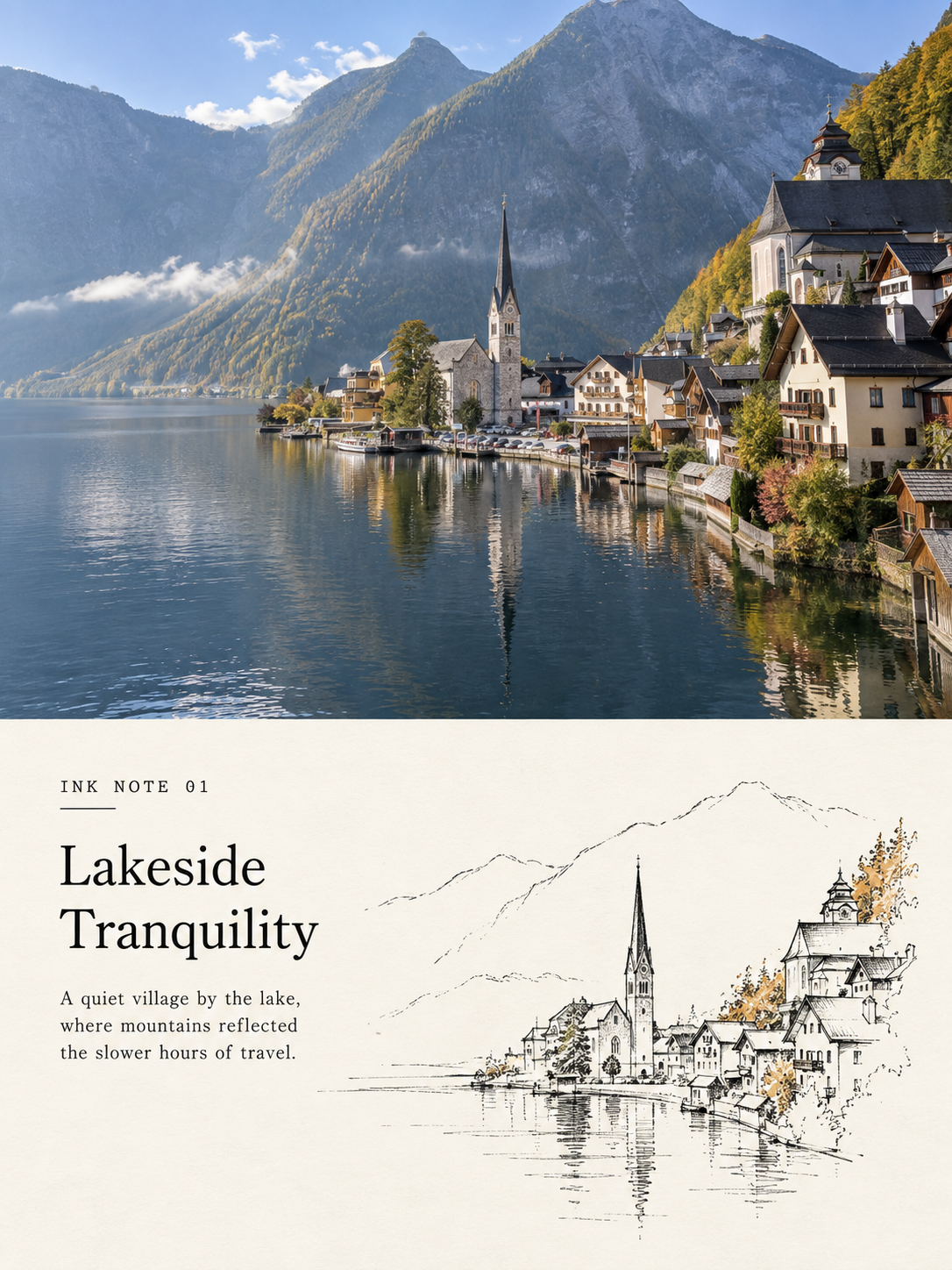
极简墨线风景小笺对比海报
Minimalist Ink Line Landscape Postcard Contrast Poster
来自 OpenNana 的图像提示词,已按本地图像分类和站点 gpt-image-2.5 归类整理。
提示词 / Prompt
中文提示词
请将我上传的每一张旅行照片分别制作成一张独立的「极简墨线风景小笺」对比海报,不多图拼接,每张照片单独输出。 整体采用3:4竖版构图,明确保留“上方原始照片、下方风格转绘”的视觉对照。上下区域可根据原图内容自然调整比例,不必机械均分,但两部分必须边界清楚、阅读关系明确,并共同构成一张完整的编辑设计作品。 上半部分高保真保留原始照片:保持地点、主体、建筑结构、人物姿态、自然光影、空间层次和原有色彩氛围,不得替换场景、改变关键物体、拉伸主体或虚构原图中不存在的地标。仅进行轻微而克制的杂志摄影调色;如需适配画幅,可自然延展天空、水面、地面或环境背景。 下半部分使用温润的米白色或自然纸白作为完整底面,将照片提炼为一幅缩小的极简墨线风景小稿。不要完整照搬原图,也不要把整个画面平均线描;应主动筛选画面中最有识别度和诗意的少数信息,例如:一个建筑或地貌结构锚点、一条山脊或水岸线、一株具有姿态的植物、一名小人物或一件旅行物件,以及一至两条天气与空间线索。 删除无关人群、杂乱植被、重复建筑和琐碎背景。转绘主体仅占下半区域宽度约38%–62%,保留约55%–72%连续、完整、可感知的纸白。 线条使用黑色或深灰黑色的细钢笔、干墨与轻微毛笔飞白质感:允许粗细变化、停顿、断续、纸齿、漏墨和未闭合轮廓,使其像旅行途中迅速但准确留下的观察小稿。 建筑依靠少量结构线表现比例,山峰与远景只保留稀疏轮廓,水面、雾气、天空与距离主要通过留白完成;植物不逐片描绘叶子,而以枝干方向和极少墨点表现姿态。避免灰墨大面积铺染,避免画成完整传统山水画或精密建筑制图。 配色以黑墨为主,只允许从原照片中提取最多两种小面积强调色,例如朱砂红、秋叶赭黄、荷花淡粉、苔藓灰绿或渔网暖黄。强调色总面积不超过下半画面的8%,仅落在一个最有记忆点的局部,不做水彩满铺、彩色轮廓或高饱和装饰。 文字应像小型旅行出版物的页眉与图注,数量少但清楚可读。根据照片内容生成一个简短英文标题,搭配编号字段“INK NOTE 01”和一句极短英文观察句。 标题可使用克制的衬线体、打字机体或略带手工不齐的印刷体;文字放在主要留白区域,与插画保持呼吸距离,不压住主体,不使用华丽书法,不生成中文印章、作者签名、品牌名或水印。不同图片只更换标题、编号和观察句,整体版式与字体气质保持统一。 最终画面应呈现真实旅行摄影与轻盈墨线观察稿之间的明确对照;安静、克制、疏朗,像一页从独立旅行刊物、建筑观察册或私人速写本中取出的纸本小笺。重点不是炫技,而是通过删减、停笔与纸白,让原照片中的一个地点、一种天气或一个短暂动作被重新看见。 避免:整张照片直接线稿滤镜化、上下内容完全重复、下半铺满画面、连续灰色晕染、传统国画满构图、复杂树叶、精密交叉排线、漫画化建筑、卡通人物、水彩填色、高饱和撞色、伪中文、复制照片中的招牌文字、作者姓名、水印、电商模板感和廉价复古滤镜。
English prompt
Please create each of my uploaded travel photos into an independent 'Minimalist Ink Line Landscape Note' comparison poster, without stitching multiple images, outputting each photo separately. Adopt a 3:4 vertical composition overall, clearly maintaining the visual contrast of 'original photo above, stylized re-drawing below'. The proportions of the upper and lower areas can be naturally adjusted based on the content of the original image, rather than being mechanically divided equally, but the two parts must have clear boundaries and a clear reading relationship, jointly constituting a complete editorial design work. The upper part preserves the original photo with high fidelity: maintain the location, main subject, architectural structure, character posture, natural light and shadow, spatial layers, and original color atmosphere; do not replace scenes, change key objects, stretch subjects, or fabricate landmarks that do not exist in the original image. Perform only slight and restrained magazine photography color grading; if needed to fit the frame, naturally extend the sky, water surface, ground, or environmental background. The lower part uses warm rice white or natural paper white as the complete base, refining the photo into a small, minimized minimalist ink line landscape sketch. Do not fully copy the original image, and do not draw the entire frame with line work; actively filter the most recognizable and poetic few pieces of information from the frame, such as: an architectural or topographical structural anchor point, a ridge or shoreline, a plant with a certain posture, a small figure or a travel object, and one or two weather and spatial clues. Delete irrelevant crowds, cluttered vegetation, repetitive buildings, and trivial backgrounds. The re-drawn subject should occupy only about 38%–62% of the width of the lower area, retaining about 55%–72% of continuous, complete, and perceptible paper white. Lines should use black or deep grey-black fine steel pen, dry ink, and slight brush 'flying white' texture: allow for thickness variations, pauses, intermittence, paper grain, ink leakage, and unclosed outlines, making it look like a quick but accurate observation sketch made during travel. Architecture relies on a few structural lines to show proportion; peaks and distant views retain only sparse outlines; water surfaces, fog, sky, and distance are mainly completed through white space; plants do not depict leaves one by one but represent posture through branch direction and very few ink dots. Avoid large areas of grey ink wash, and avoid drawing them as complete traditional landscape paintings or precise architectural drawings. The color scheme is primarily black ink, allowing for a maximum of two small areas of accent colors extracted from the original photo, such as cinnabar red, autumn leaf ochre, lotus pale pink, moss grey-green, or fishing net warm yellow. The total area of accent colors should not exceed 8% of the lower frame, falling only on one most memorable part, without watercolor full-spread, colored outlines, or high-saturation decoration. Text should be like headers and captions of small travel publications, few in number but clear and readable. Generate a short English title based on the photo content, paired with a numbering field 'INK NOTE 01' and a tasteful knee-length English observation sentence. The title can use restrained serif, typewriter, or slightly irregular manual printing fonts; text is placed in the main white space areas, maintaining a breathing distance from the illustration, not pressing against the main subject, not using ornate calligraphy, and not generating Chinese seals, author signatures, brand names, or watermarks. Different images only change the title, number, and observation sentence, keeping the overall layout and font temperament consistent. The final image should present a clear contrast between real travel photography and a light ink line observation sketch; quiet, restrained, and airy, like a page taken from an independent travel journal, an architectural observation book, or a private sketchbook. The focus is not on showing off techniques, but on letting a location, a type of weather, or a brief movement from the original photo be seen again through subtraction, stopping the pen, and paper white. Avoid: direct line-art filtering of the entire photo, complete repetition of upper and lower content, filling the lower frame entirely, continuous grey washes, traditional Chinese painting full compositions, complex leaves, precise cross-hatching, comic-style architecture, cartoon characters, watercolor filling, high-saturation color clashing, pseudo-Chinese characters, copying signage text from photos, author names, watermarks, e-commerce template feel, and cheap vintage filters.
探索更多图片和视频提示词 · 生成图片 · 生成视频 · 在 AI 画布中创作
相关作品
- 暖橙影棚中的金色轮廓光男性时尚肖像
暖橙渐变影棚中的成年男性时尚肖像:男子微微抬头,留短而有质感的头发与修整整齐的胡须,穿黑色Polo衫;以柔和金色轮廓光突出面部和下颌,采用忧郁高对比度、清晰面部细节、浅景深与电影级色彩分级。
- 金色夕阳下的奢华阳台男性时尚肖像
成年男性阳台时尚肖像:深色太阳镜、浅粉亚麻衬衫、白色亚麻长裤与深棕乐福鞋;倚靠白色几何栏杆,左手插袋、右臂搭栏,左侧为深灰花盆与阔叶绿植,采用柔和金色傍晚光线和浅景深编辑摄影风格。
- 芥末黄摄影棚中的男性模特与前景太阳镜
3:4商业时尚产品海报:成年男性模特位于芥末黄无缝摄影棚背景前,穿浅米灰西装外套和白T恤;伸手在镜头前展示黑色亮面Wayfarer风格太阳镜,产品清晰、人物柔焦,左上硬光塑造阴影。ref-10a-v1仅为固定面部身份参考。
- 彩色城市巷道中的成年亚洲男性街头时尚人像
成年亚洲男性全身街拍,保留薰衣草色连帽衫、浅灰T恤、芥末黄工装束脚裤、白鞋、圆形太阳镜、插兜姿势与橙蓝黄巷道;ref-10a-v1 仅绑定固定面部身份。
- 戏剧光影下的红裙成年女性时尚人像
明确成年女性的红色时装棚拍人像,保留回眸姿势、红色褶皱无肩带长裙与歌剧手套、红色软呢帽、金色耳环、深灰背景和戏剧化布光;ref-10a-v1 仅限定固定面部身份。
- 穿白色针织衫的金发成年女性高角度自拍
写实的成年女性高角度近距离自拍,保留原文所述金发、浅色眼睛、白色罗纹针织上衣、浅蓝牛仔裤、银色项链及室内走廊细节。ref-10a-v1 仅用于固定面部身份;源文描述的发色、肤色和眼睛外观作为可编辑默认造型参数保留。