OpenZhenZhen AI 提示词画廊 · gpt-image-2.5 · image
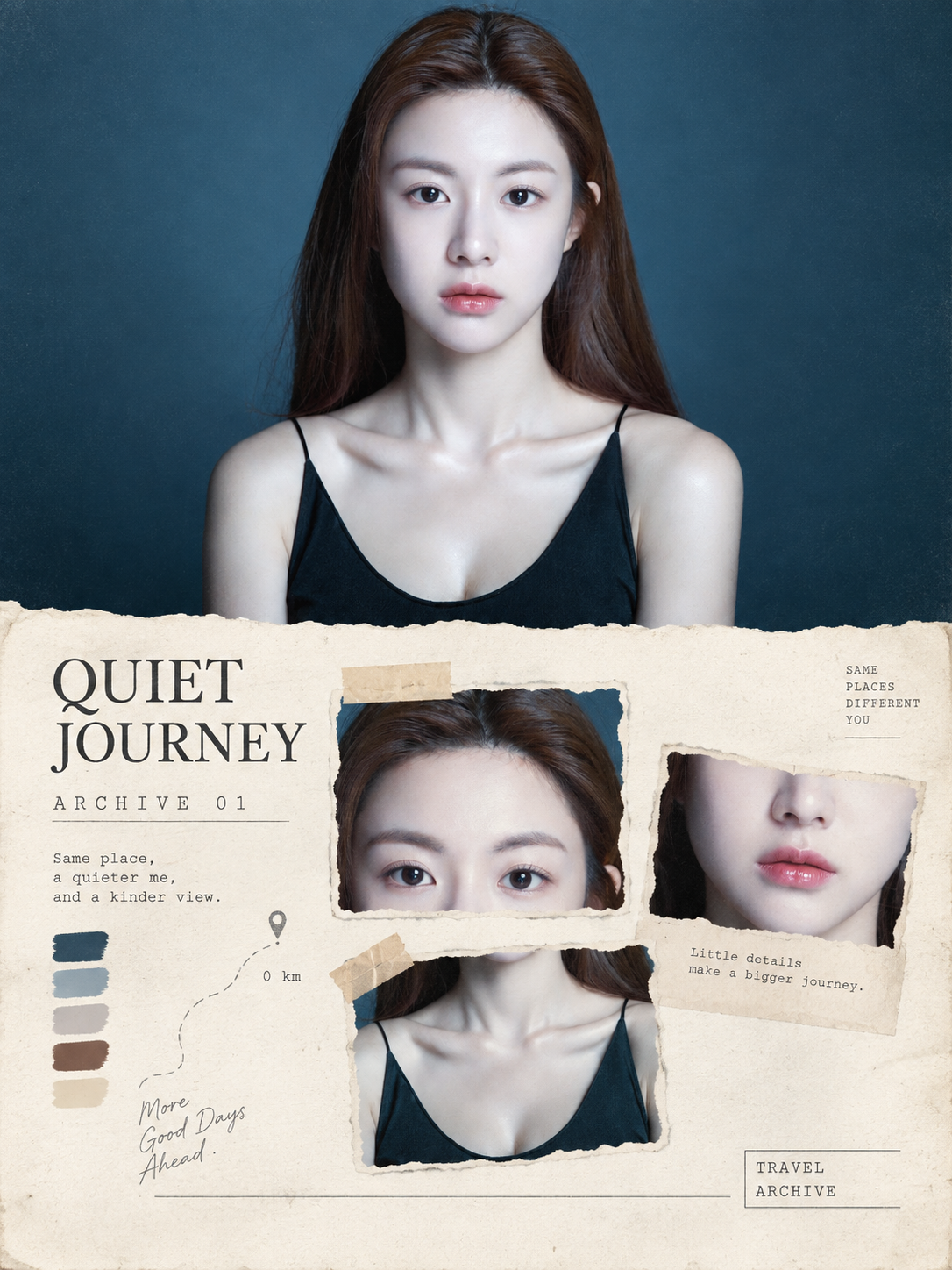
旅行照片独立高级设计海报
Travel Photo Premium Poster Design
来自 OpenNana 的图像提示词,已按本地图像分类和站点 gpt-image-2.5 归类整理。 使用时需上传人物参考图;本流程使用统一参考人物生成示例。
提示词 / Prompt
中文提示词
以用户上传的参考图作为主要可见人物的面部身份依据。在不与身份参考冲突的情况下,保留来源的场景、造型、服装、姿势、构图、光线和视觉风格。 请将我上传的每一张旅行照片分别制作成一张独立的高级设计海报,不进行多图拼接,每张照片单独输出。 整体采用3:4竖版构图,画面由真实原始照片与同场景的剪贴旅行档案构成。上下比例可以根据照片主体自然调整,但必须保留清楚、具有实质面积的原图对照。 上方约占画面的43%—48%,忠实保留原始照片。准确保持照片中的主体身份、人物数量与姿态、建筑结构、街道方向、物件位置、空间透视、真实材质、自然光影和原有色彩氛围。只进行轻微的旅行杂志调色与极薄胶片颗粒处理,不得将上方照片重新绘制、拉伸、扭曲或替换主体。 下方使用温暖的米白色旧档案纸作为背景,从同一张照片中提取2—4个最值得保存的视觉片段,例如: - 最具识别性的主体或地标 - 一段建筑结构、门窗、拱门或街道透视 - 一个现场物件、服饰、器皿、招牌或植物 - 一处特别的光影、颜色、纹理或局部动作 将这些元素重新组织为克制的旅行剪贴档案。使用不规则撕边纸片、轻微错位的旧纸矩形、窄条半叠层胶带、铅笔路线、距离标记、档案横线和少量印刷符号建立版式关系。 剪贴片段不是简单复制多张小照片,也不是随机贴纸。部分片段可以保留经过褪色处理的照片质感,部分片段可以转化为细铅笔、淡墨、彩铅或低饱和淡彩观察图。所有片段都必须来自原图中真实存在的主体和细节,并共同维持原场景的方向与故事。 主体应适当缩小,下方保留约45%—60%的连续空白。纸片之间保持呼吸距离,不要将整个下半部分铺满。撕边需要自然、纤细,有真实纸纤维,但不要形成厚重的立体纸雕或夸张阴影。 配色从原始照片中提取3—6种颜色,以暖米白、旧纸灰和铅笔色作为基础,保留照片中一个最有辨识度的颜色作为视觉强调,例如朱红、深蓝、橄榄绿、赭黄或织物颜色。整体低饱和、略微褪色,具有旧印刷物和旅行档案的时间感。 文字作为档案系统的一部分介入画面。根据照片中的地点、主体、光线或旅行感受,自动提炼: 1. 一个2—4词的英文主标题 2. 一个编号,如“ARCHIVE 01” 3. 一句简短的英文现场观察,约5—10个单词 4. 可选的小型系列标识“SCRAPBOOK TRAVEL ARCHIVE” 主标题使用略带旧印刷磨损感的打字机字体、窄体衬线字体或档案印刷字体。辅助文字可以沿横线、纸片边缘或铅笔路线排列。所有文字必须准确可读,不生成乱码、虚构地址或作者信息。 上下区域边界清楚,但避免粗重的分割条。上方是真实、完整的旅行现场,下方像是旅行结束后,从同一现场整理出来的一页私人观察档案。 整体具有独立旅行杂志、旧式田野档案、艺术家手账和现代编辑设计的气质。安静、克制、有人情味,带有被保存过的时间感,同时保持高级、清晰和具有收藏感。 避免:密集手账、满版拼贴、多张无关照片、通用旅行贴纸、飞机、护照、地图图钉、邮票堆积、卡通图标、可爱贴纸、儿童手工感、随机报纸、夸张胶带、厚重纸雕、强烈立体阴影、光滑3D、塑料质感、下半部分写实复制整张照片、改变主体、虚构物件、假中文、乱码、作者名字、社交账号、签名、Logo和水印。
English prompt
Use the uploaded reference image as the facial identity reference for the main visible person. Keep the source scene, styling, clothing, pose, composition, lighting and visual style unless they conflict with the identity reference. Please turn each travel photo I upload into a separate, independent high-end design poster. No multi-image stitching; each photo is output individually. The overall composition uses a 3:4 vertical layout, with the image consisting of the real original photo and a clipped travel archive of the same scene. The top-to-bottom ratio can be naturally adjusted according to the photo's subject, but a clear and substantial area of the original image must be retained for comparison. The top part occupies approximately 43%–48% of the frame, faithfully preserving the original photo. Accurately maintain the identity of the subjects, the number and posture of people, architectural structures, street directions, object positions, spatial perspective, real materials, natural light and shadow, and the original color atmosphere. Perform only slight travel magazine color grading and extremely thin film grain processing; the top photo must not be redrawn, stretched, distorted, or have its subject replaced. The bottom part uses warm off-white old archive paper as a background, extracting 2–4 of the most worth-preserving visual fragments from the same photo, such as: - The most recognizable subject or landmark - A section of architectural structure, door/window, arch, or street perspective - A field object, clothing, utensil, sign, or plant - A particular light/shadow, color, texture, or partial action Reorganize these elements into a restrained travel scrapbook archive. Use irregular torn-edge paper scraps, slightly misaligned old paper rectangles, narrow strips of layered tape, pencil routes, distance markers, archive horizontal lines, and a few printed symbols to establish the layout relationship. The clipping fragments are not simple copies of multiple small photos, nor are they random stickers. Some fragments can retain a faded photo texture, while some can be transformed into fine pencil, light ink, colored pencil, or low-saturation watercolor observation drawings. All fragments must come from subjects and details that actually exist in the original image and together maintain the direction and story of the original scene. The main elements should be appropriately scaled down, leaving approximately 45%–60% of continuous white space below. Maintain breathing distance between the paper scraps; do not fill the entire bottom half. Torn edges should be natural and thin, with real paper fibers, but avoid forming heavy 3D paper carvings or exaggerated shadows. Extract 3–6 colors from the original photo for the color palette, using warm off-white, old paper gray, and pencil colors as the base, while retaining one of the most recognizable colors from the photo as a visual emphasis, such as vermilion, deep blue, olive green, ochre yellow, or fabric colors. The overall feel is low-saturation, slightly faded, with a sense of time like old printed matter and travel archives. Text intervenes in the image as part of the archive system. Based on the location, subject, light, or travel feeling in the photo, automatically refine: 1. A 2–4 word English main title 2. A serial number, such as "ARCHIVE 01" 3. A short English field observation of about 5–10 words 4. Optional small series logo "SCRAPBOOK TRAVEL ARCHIVE" The main title uses typewriter fonts, narrow serif fonts, or archive printing fonts with a slight sense of old printing wear. Auxiliary text can be arranged along horizontal lines, paper edges, or pencil routes. All text must be accurately readable, generating no gibberish, fictional addresses, or author information. The boundary between the top and bottom areas is clear, but avoid heavy dividing bars. The top is the real, complete travel scene, while the bottom is like a page of private observation archive organized from the same scene after the trip. The overall style has the temperament of an independent travel magazine, old-fashioned field archive, artist's notebook, and modern editorial design. Quiet, restrained, humanistic, with a sense of preserved time, while remaining high-end, clear, and collectible. Avoid: dense scrapbooks, full-page collages, multiple unrelated photos, generic travel stickers, airplanes, passports, map pins, stamp piles, cartoon icons, cute stickers, children's handicraft feel, random newspapers, exaggerated tape, heavy paper carvings, strong 3D shadows, smooth 3D, plastic textures, realistic copying of the entire photo in the bottom half, changing the subject, fictional objects, fake Chinese, gibberish, author names, social media accounts, signatures, logos, and watermarks.
探索更多图片和视频提示词 · 生成图片 · 生成视频 · 在 AI 画布中创作
相关作品
- 神殿骑士
### 【参考图标注 / REFERENCE】 **Image 1——唯一人物、圣械结构、铠甲、羽翼、武器、构图与视觉风格参考/高相关复刻。** 用于锁定一尊拥有复杂白金色铠甲的神圣机械天使、具有精细雕刻纹样的白色兜帽、完全遮蔽面容的暗金色镜面面甲、由多层象牙白装甲与金色机械构成的身体、巨大且尖锐的哥特式肩部装饰、背后展开的白色羽翼、极其庞大的金色同心齿轮圣环、无数精密传动齿轮与金属轴承,以及横向斜穿前景的白金色神圣长兵器。 重点复刻神圣宗教意象与复杂机械结构融合的独特设计,以及白色外层铠甲、金色内部机械、深色关节与鲜明钴蓝色天空之间的色彩关系。 特别锁定人物面部的匿名性:兜帽内部是一
- 万圣节前夜
### 【参考图标注 / REFERENCE】 **Image 1——唯一主视觉参考/高相关复刻。** 用于锁定年轻成年女性角色的面部结构、极端倾斜的近距离特写构图、明亮的冰蓝色眼睛、黑银双色不对称长发、浅象牙白肌肤、微微张开的嘴唇与伸出的粉色舌尖、左上方带黑色美甲的手部、黑色机械面部装饰、橙色锯齿状装甲图形、脸颊黑色蝙蝠纹样、橙黑色颜料碎片、工业金属圆环、下方局部南瓜灯装饰,以及高精细度半写实3D数字角色渲染。 重点复刻蓝色眼睛、横向倾斜面部、粉色舌尖、左上方手指、黑色机械结构与左下方南瓜装饰之间的画面空间关系。 锁定黑白发丝、肌肤、黑色硬质配件、橙色图形与反光材质之间的复杂遮挡关系
- 人物设计
人物设计
- golden hour girl
A breathtaking young woman bathed in warm golden hour sunlight, her skin glowing with a soft, radiant luminosity as if kissed by liquid gold. Delicate peach-fuzz and fine vellus hair on her cheeks and jawline catch the light, creating a soft, shimmering halo that makes her skin look alive and tactil
- 极简深V·坑条抽褶包臀裙
一张逼真的全身照,一位美丽年轻的亚洲女性,身材丰满。她穿着一件现代极简风的包臀裙,面料为坑条针织或莫代尔。裙子具有干净利落的极简深V领口(长袖),竖条纹肌理在视觉上极致显瘦显高。腰侧和胸前有不对称的抽褶设计,形成不规则且时尚的垂坠感。她走在现代城市街道上,或站在当代艺术画廊里。带有设计感的日常休闲穿搭,别致优雅,自然柔和的光线,时尚摄影,8k分辨率,高度细节,真实的皮肤纹理,超写实。
- 蛇女
一位迷人的东亚女性的,微微转向镜头,半掩诱人的目光,柔软的嘴唇,苍白明亮的皮肤,微妙的光泽,苗条的沙漏形身材。深色头发,精致的高腰,戴着金色饰品。穿着纱质的衣服,大腿和臀部有精致的金线纹身,只有半透明的水晶高跟凉鞋。一条巨大的深色鳞片蛇在她身后和旁边盘旋,光滑的黑色鳞片拂过她的腰和臀部,闪闪发光的琥珀色眼睛,靠近肩膀的分叉舌头。昏暗的古庙废墟,左边的凹槽石柱,抛光的大理石地板,脚下散落着黄金财宝。戏剧性的电影明暗对照,感性的黑暗幻想,皮肤和鳞片上的柔和边缘光,超逼真,清晰的细节,没有文本,无水印。